Writing · Men's health
Is Low Testosterone Reversible? It Depends What's Causing It...
This is educational information, not medical advice. To be clear, some men genuinely need TRT. Real structural failure exists, it's serious, and for those men replacement can be the right call. This isn't about demonising the treatment or the people who prescribe it. It's about one question most men are never walked through before they start: why their testosterone is low.
- Where is the chain breaking? In your brain's signal, or in your testicles?
- Can it be fixed? Is something permanently damaged, or is something dragging the system down?
The 2 main categorisations of low testosterone (hypogonadism):
Primary hypogonadism is when the testicles fail to produce adequate testosterone, even when they're receiving proper signals from the brain. We'll call this the testicular type.
Secondary hypogonadism is when your brain (your hypothalamus or pituitary gland) fails to signal your testicles to produce testosterone - even though the testicles themselves may work perfectly fine. We'll call this the signalling type.
Here is a diagram of the HPT (hypothalamic-pituitary-testicular) axis, which is your testosterone “chain-of-command”, to see this visually:1
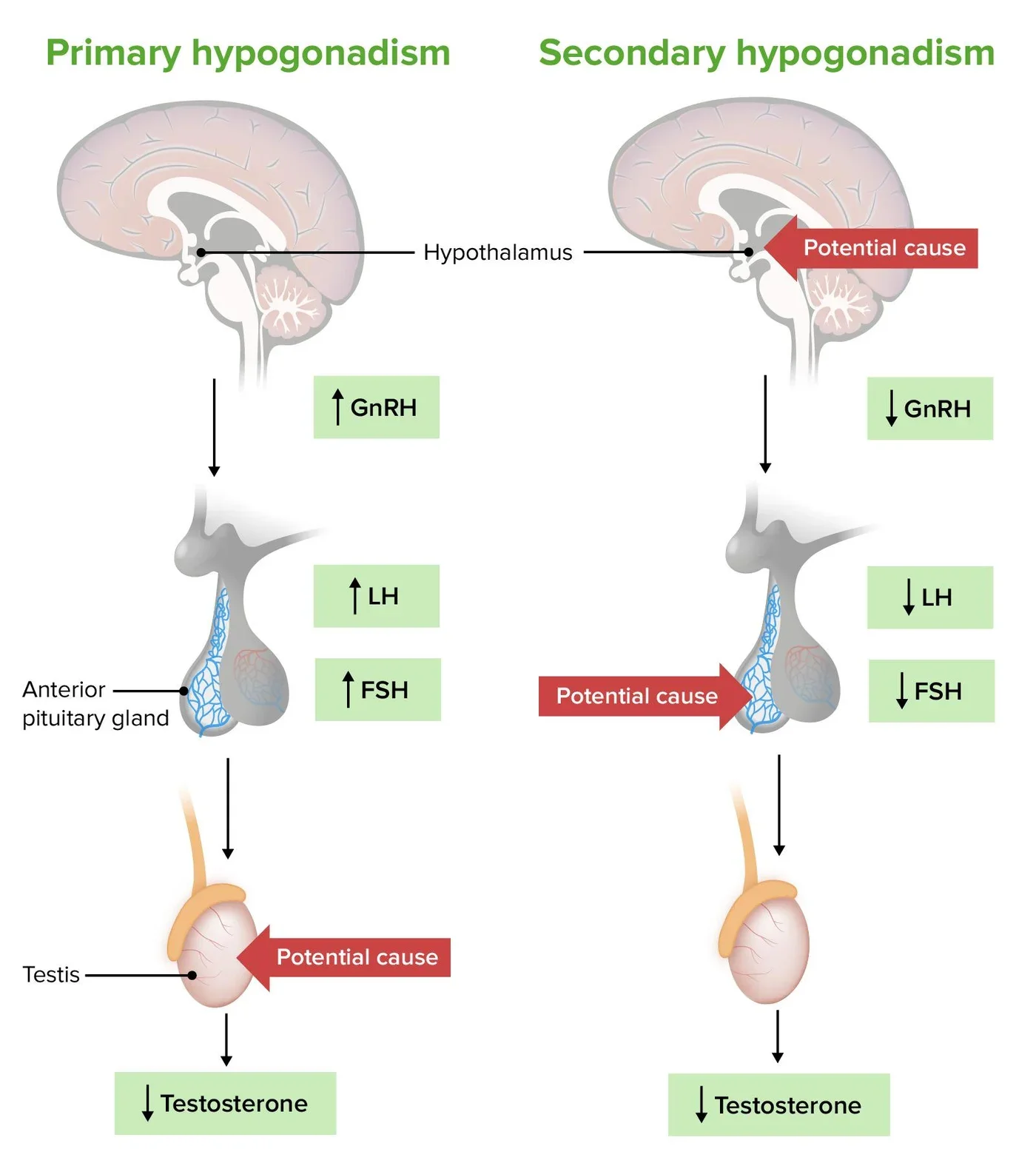
On paper, this is only step one. The guidelines ask doctors to go on and find the cause - and to treat it first where it can be treated.2,3 In practice, that's often where it stops. Plenty of men never even get this far. In a recent Australian study of men referred to two hospital endocrine clinics for low testosterone, only around 2 in 3 referrals (65%) included LH and FSH - the very tests that tell the two types apart. And those are the men who made it to a specialist.4
So we're going to go deeper than the label.
The Pattern Recognition Gap
Here's how it too often goes in practice:
- Low testosterone reading? → Prescribe testosterone
- Still feel bad? → Increase dose
- Side effects? → Add more medications
It's like using a hammer for every problem, whether it's a communication issue, a cellular optimisation challenge, or a transport problem. This one-size-fits-all approach ignores the biological complexity we're about to go through.
The Corporate Structure of Your Hormone System
Educational Framework Notice: The following analysis of research patterns is intended solely for educational purposes. This information does not constitute medical advice, diagnosis, treatment recommendations, or professional medical guidance. Individual medical situations are complex and require evaluation by qualified healthcare professionals. This information is intended to help you become an informed participant in medical discussions with qualified healthcare providers.
Your testosterone is made and delivered by the HPT axis from the diagram above. Set the medical names aside for a moment and picture it as a company, where each department has one job.
Think of it as your biological chain of command:
The C-Suite (Hypothalamus): Your brain's executive leadership. Makes the high-level decisions about when and how much testosterone to produce. Sends strategic directives down the chain.
Middle Management (Pituitary): Takes those executive orders and translates them into specific operational instructions. The critical link between strategy and execution.
The Production Floor (Testes): Your actual manufacturing facility. Where the real work happens - converting raw materials into testosterone.
The next two links are where we go a little deeper. They sit outside the standard primary/secondary split - but they still affect how much testosterone your body actually gets to use.
Logistics & Distribution (SHBG/Albumin): Your transport and delivery system. Gets the finished product to where it needs to go, at the right time, in the right amounts.2
Delivery (Cortisol): Your final handoff point, where testosterone actually does its job. Cortisol, your main stress hormone, interferes with that job. To be accurate, cortisol doesn't only act at this one point. It works on several levels of the chain at once: it can turn down the brain's signal (hypothalamus), the pituitary's message (LH), and production in the testes directly.5 In one study, raising cortisol in men dropped their testosterone within hours, with no change in the brain's LH signal. That's a direct hit on the testes.6 I've parked it at the end of the chain here to keep the picture simple.
When a company's output drops, you don't sack everyone and bring in contractors. You find out where in the chain it's breaking.
Is the C-Suite not sending clear directives? Is middle management dropping the ball on communication? Is the production floor broken? Or is the logistics network failing to deliver?
That's troubleshooting by elimination. Once you know which level is failing, you can target that level instead of replacing the whole operation.
The Different Patterns
In 2024, researchers published an editorial titled 'Male hypogonadism: need for reclassification?' arguing that 'new classifications may be necessary to fully understand its various manifestations and forms.' 7
Researchers are still debating what a better system should look like. In the meantime, here's what the troubleshooting approach above looks like when you apply it to the research…
- Pattern A = the signalling type (the C-Suite and middle management)
- Pattern B = the testicular type (the production floor)
- Pattern C = a transport and delivery problem (logistics): testosterone is made, but less of it is available to do its job
- Pattern D = more than one department failing at once - more common with age
Pattern A: The Signalling Type (Secondary Hypogonadism)
Based on secondary hypogonadism research 4,8,9
Note: Doctors also call the signalling type secondary or central hypogonadism.
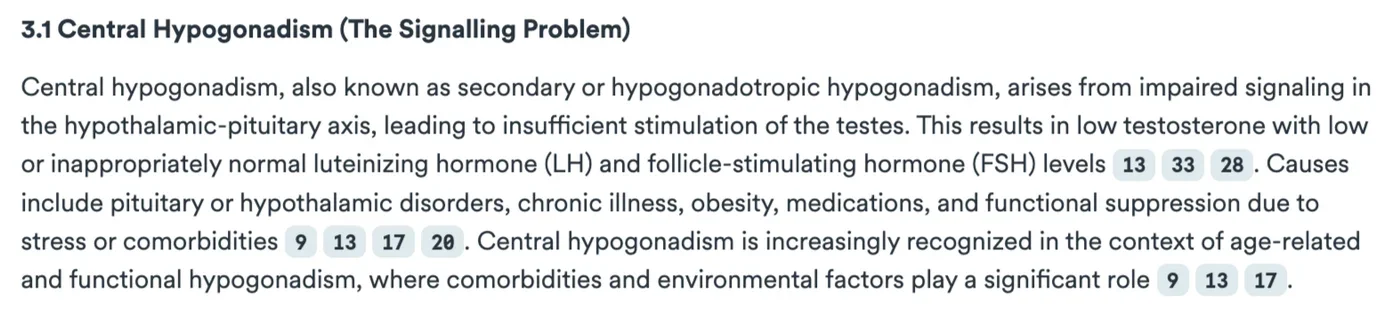
The Research Shows:
- Studies suggest metabolic dysfunction is a major driver of the signalling type.13–17
- Research links this presentation pattern to modifiable lifestyle factors

What this suggests: Low testosterone is likely related to modifiable health factors.
Pattern B: The Testicular Type (Primary Hypogonadism)
Based on primary hypogonadism research 8,18,19
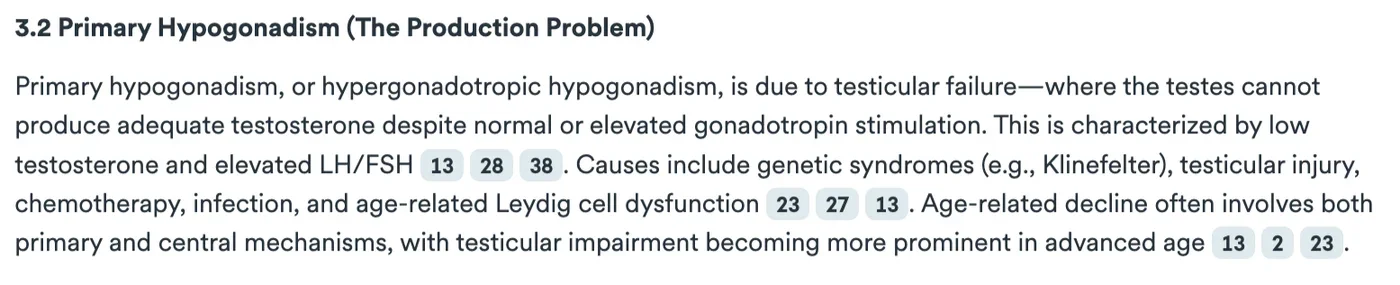
The Research Shows:
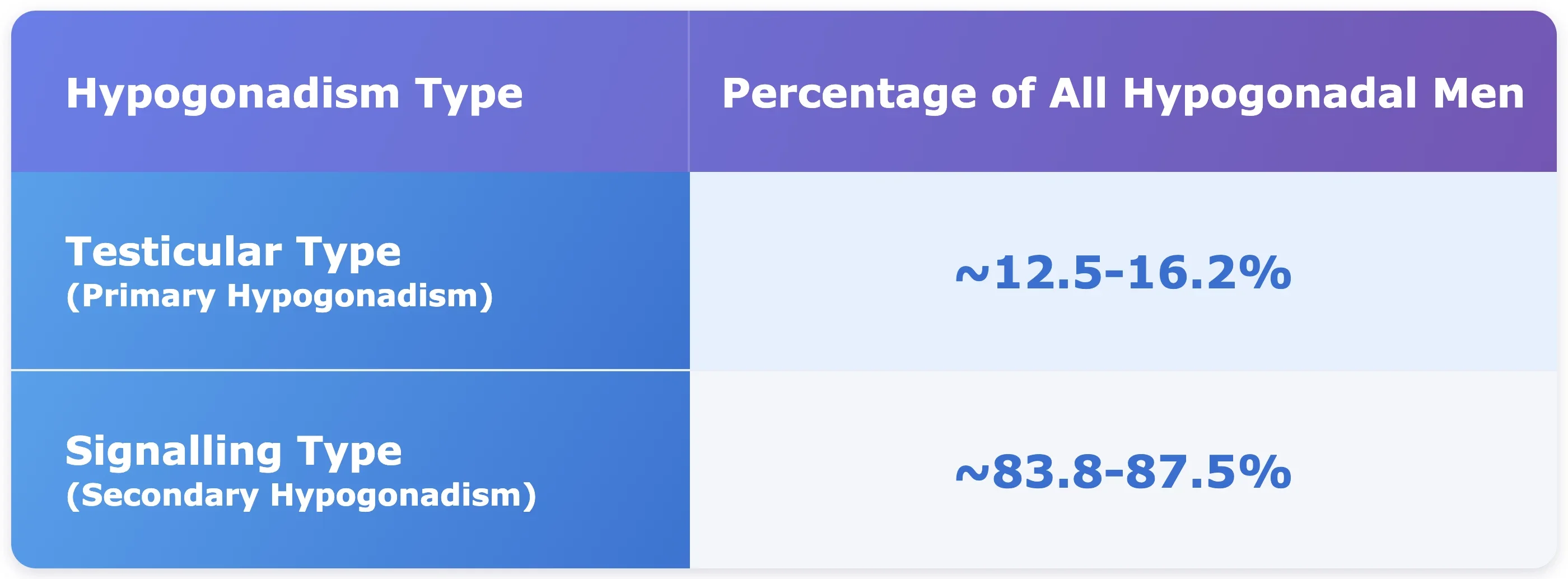
- Data indicates this affects ~12.5-16.2% of men with low testosterone in published studies8,10–12
- est. ~50% have no identifiable cause - more on what that does and doesn't mean below.20
- Research shows age-related decline often involves both central and testicular factors
- Literature also documents subclinical/compensated presentations with normal testosterone but elevated brain signalling hormones, representing early-stage testicular decline where increased brain stimulation maintains normal hormone output.11,12,21
Pattern C: Subclinical Functional Hypogonadism (The Transport & Delivery Problem)
Based on emerging research on transport/binding dysfunction 22,23
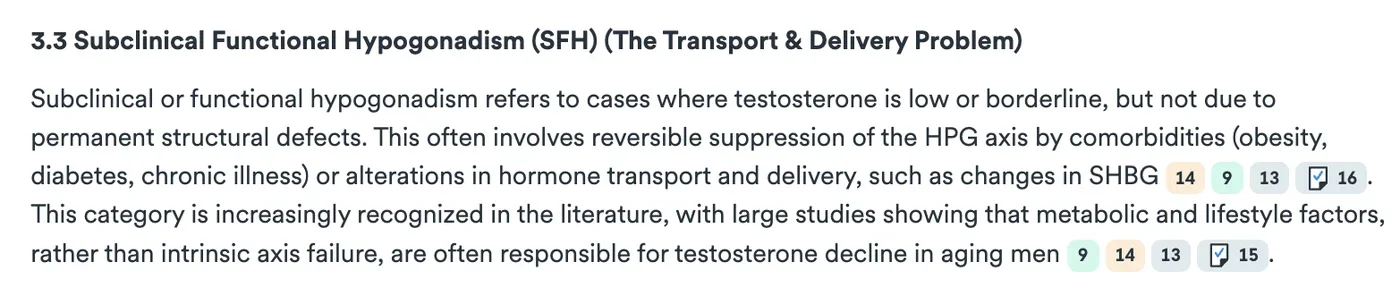
The Research Shows:
- 2024 research describes SFH as a "novel and multifactorial condition that transcends traditional definitions" with normal or slightly altered testosterone but impaired tissue-level activity22,24,25
- Published studies show SHBG (Sex Hormone-Binding Globulin) levels change how much testosterone is actually available: obesity tends to lower SHBG, which drags total testosterone down even when free testosterone is fine - while higher SHBG, which rises with age, can leave free testosterone low even when total testosterone looks normal.19,26
“Does he [the patient] have a super high SHBG [testosterone binding protein] you know, should we be evaluating that because maybe he just has a low free T, instead of a his total is fine. In that case, you could have brutal symptoms but your production is still good, it's just being bound up severely, and why is that the case? Do you have severe liver issues or something?” 27
– Derek Munro
More Plates More Dates
- Literature documents chronic stress and elevated cortisol can interfere with testosterone function through multiple pathways: reducing androgen receptor availability, suppressing testosterone production, and blocking testosterone's effects on target tissues.
- Research suggests this presentation pattern may correlate with factors common in high-stress professional environments, though individual assessment remains essential
Note: Raising cortisol quickly lowers testosterone, largely by acting on the testicles directly.6 That being said, cortisol affects many points in the HPT axis (testosterone’s “chain of command”)5 but for simplicity I included it here as literature seems to bundle it into this pattern.
Pattern D: Mixed Pattern (The Complex Problem)
Based on research on multi-system involvement 18,28–31
The Research Shows:
- Literature describes cases with features of both types at once - problems with the brain's signal and with the testicles.29,31
- This is especially common with age, when both the testicles' output and the brain's signal decline.18
- Some treatments, such as chemotherapy, and some rare genetic conditions can affect both at once.28,30,31
How Common Is Each Type?
The European Male Ageing Study examined 3,369 men aged 40-79. Among the men with low testosterone, only about 1 in 7 (14.5%) had the testicular type (primary hypogonadism) - low testosterone because the testicles aren't producing enough.8,21
The other 85.5% - about 6 in 7 - had the signalling type (secondary hypogonadism) - suggesting their testicles still worked, but the brain wasn't signalling properly.
Three clinic studies of men with sexual problems found much the same split:
Sexual dysfunction clinic: ~84% had the signalling type.10
Erectile dysfunction clinic study: ~87% had the signalling type.11
Overlapping clinical cohort: ~88% had the signalling type.12
Bottom Line: ~85% of low testosterone men seem to have the signalling type, not the testicular type.
The Critical Distinction
| The question | The possible answers | How it's worked out | |
|---|---|---|---|
| 1 | Where is the chain breaking? | Signalling type (Pattern A) or testicular type (Pattern B) - plus two grey areas: transport (C) and mixed (D) | LH and FSH blood tests |
| 2 | Can it be fixed? | Structural (permanent damage) or functional (no structural cause; often reversible) | Medical history, extra blood tests and, in some cases, a pituitary scan |
Medical research recognises an important distinction between structural and functional hypogonadism - but this differentiation is not always defined through diagnosis.32
Structural Hypogonadism:
- Irreversible pathology from congenital syndromes, tumours, trauma, surgery
- Often severely low testosterone
- A cause that shows up on a scan or genetic test (e.g. a pituitary tumour or Klinefelter syndrome)2
- Likely irreversible (Think: broken machinery that cannot be repaired)
Functional Hypogonadism:
- Associated with obesity and metabolic problems such as type 2 diabetes (by far the most common), poor sleep and sleep apnoea, long-term illness, heavy drinking, certain medications such as opioids, and chronic stress.3–5,32–34
- Mildly low or borderline testosterone that fluctuates
- Normal imaging results
- Often reversible with treatment of underlying conditions (Think: working machinery operating in poor conditions)
“The main advantage of considering a functional form of [hypogonadism] is that this is essentially a reversible form of [hypogonadism]. Therefore, physicians should strongly encourage subjects meeting the criteria of functional [hypogonadism] to adapt all the reasonable strategies to remove/mitigate the known conditions underlying functional [secondary hypogonadism], including [metabolic syndrome] and obesity.” 32
Corona G, Rastrelli G, Morelli A, et al. Treatment of Functional Hypogonadism Besides Pharmacological Substitution. World J Mens Health. 2020;38(3):256.
The problem: a bare 'low testosterone' diagnosis doesn't say which of these you have - and the treatment you're offered usually doesn't depend on it.
Here's Where It Gets Interesting
Among men with the signalling type, the research reveals another critical finding.
When endocrinologists in two Australian hospitals assessed every man referred to them with low testosterone over five years, around 5 in 6 (83%) of those with the signalling type had no structural disease of the pituitary or hypothalamus.4 A large clinic series of 4,220 men seeking help for sexual problems found much the same: around 8 in 9 (89%) had no specific medical condition (e.g., genetics, surgery, radiotherapy, or trauma) that could account for it.20,21
In other words, for most men whose brains weren't properly signalling for testosterone production, no structural cause was found - no tumour, no damage, no genetic condition. Brain scans from other studies point the same way: around 92-98% of men with this type showed no serious structural problem in the pituitary or hypothalamus.35–37
It's also important to note what these men did have. In the Australian study, 8 in 10 (79.8%) men with functional low testosterone were obese, and nearly half (48.8%) had sleep apnoea - obesity alone, or combined with long-term opioid use, accounted for over three-quarters (over 75%) of cases.4 In the clinic series, about 7 in 10 (70.7%) of the men with no identifiable cause had obesity, type 2 diabetes or metabolic syndrome.20,21
Large population studies point the same way. In the European Male Ageing Study, obesity was linked to the signalling type - lower testosterone without a matching rise in the brain's signal - while age was linked to the testicular type.8,9 In US primary care, around half of men aged 45 and over with obesity (52%) or diabetes (50%) had low testosterone.38
And it isn't just an association. As one 2025 clinical review puts it, "clinically significant weight loss substantially reverses obesity-related reductions in serum testosterone."26
The Structural:Functional Data Distribution
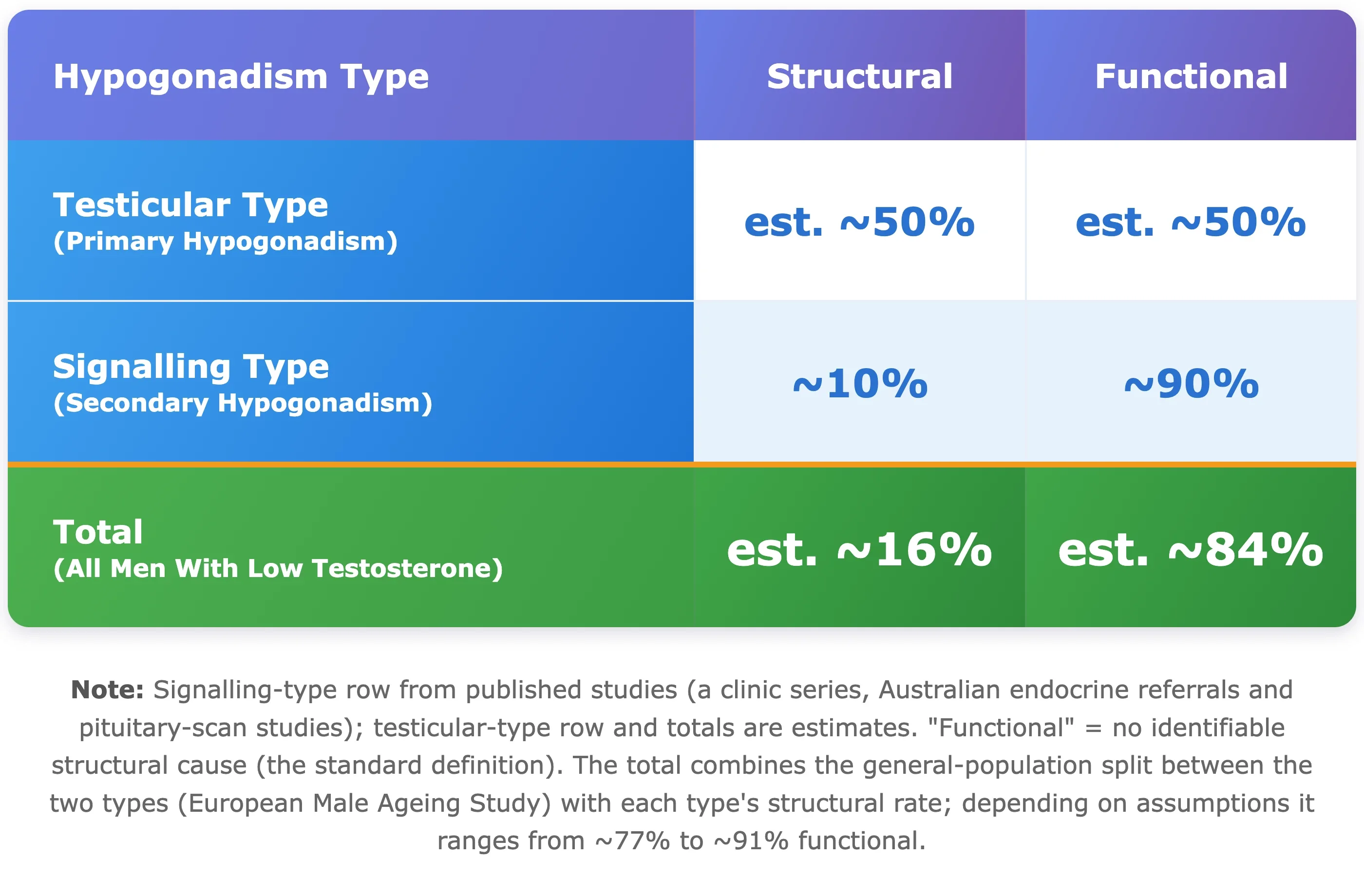
Here's what the research shows when doctors make this distinction:
Put the best available research together and around 5 in 6 men with low testosterone (est. ~84%) have no identifiable structural cause - which, by the standard medical definition, is classed as functional. Only around 1 in 6 (est. ~16%) have a structural cause that's likely permanent.*
*Our estimate, not a single study's figure - the note under the table above shows how it's worked out.3,4,8,20
Breaking this down further:
- The signalling type (secondary) - about 6 in 7 (85.5%) men with low testosterone:8
- ~90% have no identifiable structural cause (89% in a large clinic series; 83% in Australian endocrine referrals; 92-98% with no serious structural problem on brain scans)4,20,35–37
- ~10% have a structural cause that's likely permanent (e.g. pituitary tumours, severe head injury, radiotherapy)4,20,35–37,39
- The testicular type (primary) - about 1 in 7 (14.5%) men with low testosterone:8
- est. ~50% have no identifiable cause - but for this type, that usually means age-related decline, which generally doesn't reverse on its own19
- est. ~50% have an identifiable cause (e.g. Klinefelter syndrome, injury or chemotherapy)31
- These splits come from one clinic series, so treat them as rough.20
Let's Consolidate The Data
The research reveals two important findings that, when combined, paint a more complete picture of low testosterone cases:
Question 1 (where?): Most cases seem to be the signalling type rather than the testicular type
Question 2 (can it be fixed?): Most cases seem to be functional (no identifiable structural cause, and often reversible) rather than structural (permanent damage)
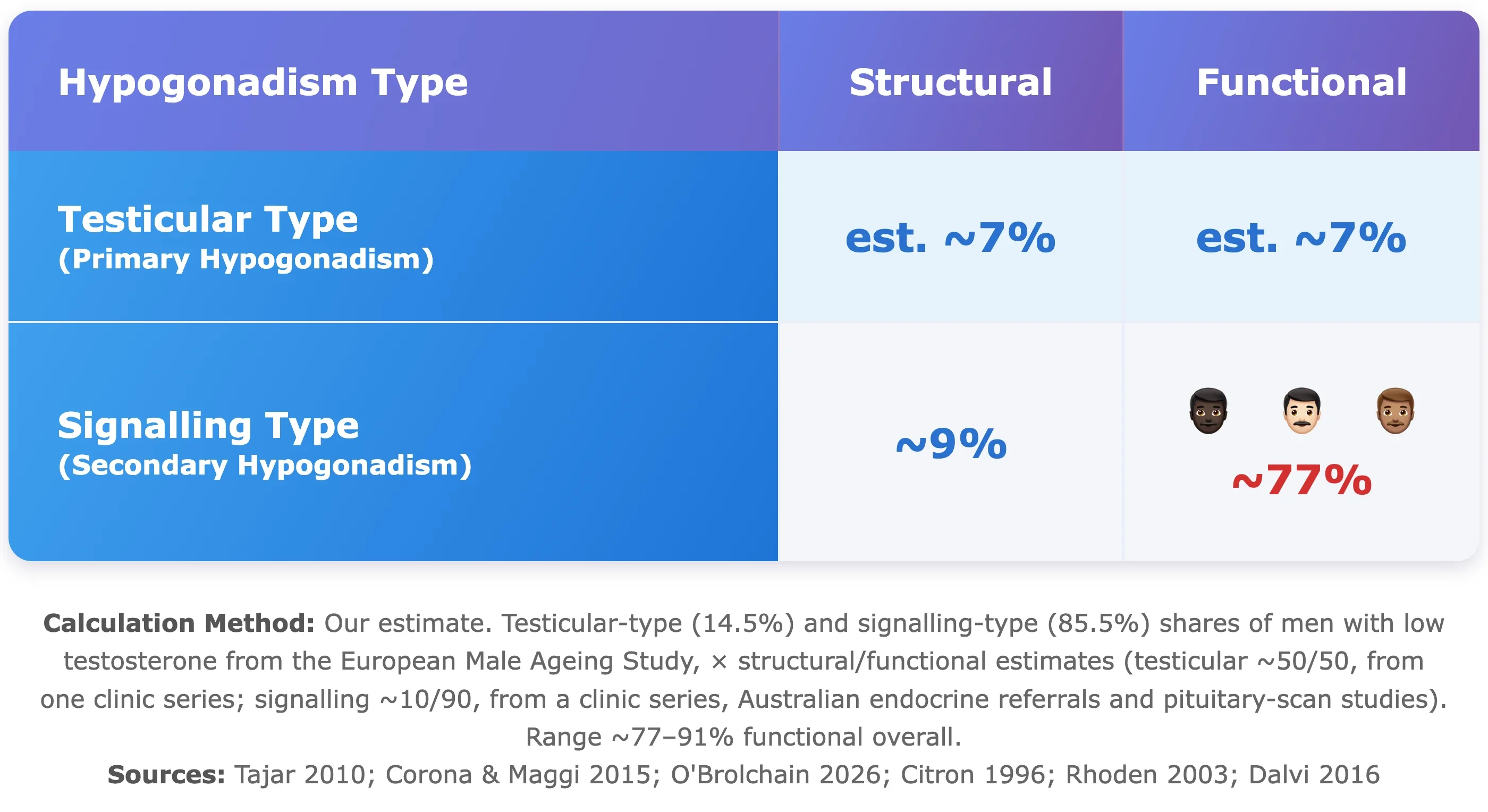
That suggests only around 1 in 10 men with low testosterone (roughly 7-11%) have testicular-type low testosterone that's unlikely to reverse - the group for whom replacement is most clearly the answer. In standard medical practice, men with permanent damage to the brain's signalling are put on TRT too, which takes the total to around 16-20%. Some of those men have another option, hCG - more on that in Part 3.
The lower figure counts only testicular-type cases with an identifiable cause (about half). The upper figure counts every testicular-type case that hadn't recovered after four years in the European Male Ageing Study (around 4 in 5, 79%). Add the ~9% with permanent signalling damage and you get ~16-20%.19,20
“I think the most justified use for [TRT] is people who have primary hypogonadism. So that is when you have [brain hormones] going to your testes but you're just not responding to them, so [brain signaling hormones] , you will see these as high in your blood work but your total T is still bottomed out… You should probably check: do you have a varicocele [enlarged vein in testicles], do an ultrasound of your testes see where things are at structurally, functionally etc. before you make any rash decisions because there could be something you're overlooking, and I do think a lot of people do overlook certain structural abnormalities that may otherwise be rectifiable. Typically testicular failure in response to adequate signaling would be the obvious, more no-brainer, [most justified use for TRT], versus if you had low [brain signaling hormones] maybe your testicles are fine so why are you haphazardly getting on testosterone when maybe it's a lifestyle thing.” 27
– Derek Munro
More Plates More Dates
That's also what the reclassification editorial was getting at: the line between functional and structural isn't always clean - which is why the ~84% is an estimate, not a fixed split.7
Now it makes more sense why 90% eventually stop, right?
Whether this research pattern applies to individual situations requires professional medical evaluation - but understanding these statistical trends matters when exploring treatment options.
The Mirror Moment
Now, let's talk about you.
Quick checklist:
- ☐ Testicles damaged in an accident requiring hospitalisation?
- ☐ Diagnosed with primary hypogonadism (the testicular type) from physical trauma?
- ☐ Pituitary tumour, serious head injury or radiotherapy to the brain?
- ☐ Diagnosed with Klinefelter syndrome?
- ☐ History of anabolic steroid abuse?
- ☐ Testosterone below 300 ng/dL (about 10.4 nmol/L) due to organ damage?
No?
Then you might be experiencing what many men over 40 face:
- 3 PM energy crashes
- Lower drive than your 30s
- Stubborn belly fat
- Brain fog during important meetings
- Recovery taking longer than it used to
The Third Choice
Many men believe they have only two choices: TRT or accepting decline.
But what about men without structural issues? Consider these potential paths:
Choice 1: TRT - May involve thousands per year, lifetime commitment, regular injections or daily gels, potential side effects, regular blood work, explaining to every new doctor why you're on it. Potentially all unnecessarily if you have functional hypogonadism like an estimated ~84% of men with low testosterone.
Choice 2: Accept Status Quo - Accept decline, feel older every year, watch your edge disappear, lose the energy to play with your grandchildren.
Choice 3: Explore Natural Optimisation - Consider addressing the underlying factors: body weight and metabolic health first, then sleep quality, stress patterns, nutrition, light exposure and environmental factors.26,39
These aren't revolutionary concepts. They're fundamental health principles that modern life has made surprisingly difficult to maintain.
The Decision Point
Look, if someone has documented testicular damage or structural issues, TRT may be a medical necessity. That's between them and their doctor.
But most men never find out if they're the 1 in 10 (roughly 7-11%) for whom TRT is most clearly the answer, or among those who might have other options. Wouldn't you want to know which group you're in before making a decade-long commitment?
If you're reading this with intact, functioning anatomy that might be underperforming due to:
- 'Cognitive Overload from Technological Devices' - constant connectivity patterns.22
- 'Circadian Rhythm Disruption' - irregular sleep schedules and light exposure.22,34,40,41
- 'Environmental Pollutants' - endocrine-disrupting chemicals in modern environments.13,22
- 'Low sunlight exposure' - limited natural light exposure patterns.22
- 'Chronic Stress' - sustained activation of stress response systems.5,6,22
- 'Obesity' - excess adipose tissue and metabolic factors.9,22,26
Then exploring all options might be worthwhile before making any long-term commitments.
“For people with truly low testosterone levels, the benefits outweigh the risks, but for millions of others, it’s in the same category as snake oil.” 42
–Dr. Brad Anawalt
The University of Washington Medical Center’s chief of Medicine and a board certified physician at the Endocrine and Diabetes Care Center at UW Medical Center – Roosevelt and Fred Hutchinson Cancer Center
References
[1] Hypogonadism - Lecturio. Accessed September 1, 2025. https://app.lecturio.com/#/article/3183?return=%23%2Fwelcome%3Ffv%3D1
[2] Bhasin S, Brito JP, Cunningham GR, et al. Testosterone Therapy in Men With Hypogonadism: An Endocrine Society Clinical Practice Guideline. J Clin Endocrinol Metab. 2018;103(5):1715-1744. doi:10.1210/jc.2018-00229.
[3] Corona G, Goulis DG, Huhtaniemi I, et al. European Academy of Andrology (EAA) guidelines on investigation, treatment and monitoring of functional hypogonadism in males. Andrology. 2020;8(5):970-987. doi:10.1111/andr.12770.
[4] O'Brolchain A, McAndrew K, Newman W, et al. Functional causes of low testosterone predominate in contemporary Australian endocrine referral practice: a two centre experience across 5 years. Endocrine. 2026;91(1):268. doi:10.1007/s12020-026-04722-4.
[5] Whirledge S, Cidlowski JA. Glucocorticoids, stress, and fertility. Minerva Endocrinol. 2010;35(2):109-125. PMID 20595939.
[6] Cumming DC, Quigley ME, Yen SS. Acute suppression of circulating testosterone levels by cortisol in men. J Clin Endocrinol Metab. 1983;57(3):671-673. doi:10.1210/jcem-57-3-671.
[7] Cannarella R, Quinton R, Calogero AE. Editorial: Male hypogonadism: need for reclassification? Front Endocrinol. 2024;15:1514350. doi:10.3389/fendo.2024.1514350
[8] Tajar A, Forti G, O’Neill TW, et al. Characteristics of Secondary, Primary, and Compensated Hypogonadism in Aging Men: Evidence from the European Male Ageing Study. J Clin Endocrinol Metab. 2010;95(4):1810-1818. doi:10.1210/jc.2009-1796
[9] Wu FC, Tajar A, Pye SR, et al. Hypothalamic-pituitary-testicular axis disruptions in older men are differentially linked to age and modifiable risk factors: the European Male Aging Study. J Clin Endocrinol Metab. 2008;93(7):2737-2745. doi:10.1210/jc.2007-1972.
[10] Guay A, Seftel AD, Traish A. Hypogonadism in men with erectile dysfunction may be related to a host of chronic illnesses. Int J Impot Res. 2010;22(1):9-19. doi:10.1038/ijir.2009.46
[11] Maseroli E, Corona G, Rastrelli G, et al. Prevalence of Endocrine and Metabolic Disorders in Subjects with Erectile Dysfunction: A Comparative Study. J Sex Med. 2015;12(4):956-965. doi:10.1111/jsm.12832
[12] Corona G, Maseroli E, Rastrelli G, et al. Characteristics of Compensated Hypogonadism in Patients with Sexual Dysfunction. J Sex Med. 2014;11(7):1823-1834. doi:10.1111/jsm.12549
[13] Crisóstomo L, Pereira SC, Monteiro MP, Raposo JF, Oliveira PF, Alves MG. Lifestyle, metabolic disorders and male hypogonadism – A one-way ticket? Mol Cell Endocrinol. 2020;516:110945. doi:10.1016/j.mce.2020.110945
[14] Miller C, Madden-Doyle L, Jayasena C, McIlroy M, Sherlock M, O’Reilly MW. Mechanisms in endocrinology: hypogonadism and metabolic health in men—novel insights into pathophysiology. Eur J Endocrinol. 2024;191(6):R1-R17. doi:10.1093/ejendo/lvae128
[15] Armeni E. Male hypogonadism in overweight and obesity. Metab Target Organ Damage. 2023;3(2):9. doi:10.20517/mtod.2023.05
[16] Pivonello R, Menafra D, Riccio E, et al. Metabolic Disorders and Male Hypogonadotropic Hypogonadism. Front Endocrinol. 2019;10:345. doi:10.3389/fendo.2019.00345
[17] Genchi VA, Rossi E, Lauriola C, et al. Adipose Tissue Dysfunction and Obesity-Related Male Hypogonadism. Int J Mol Sci. 2022;23(15):8194. doi:10.3390/ijms23158194
[18] Golan R, Scovell JM, Ramasamy R. Age-related testosterone decline is due to waning of both testicular and hypothalamic-pituitary function. Aging Male. 2015;18(3):201-204. doi:10.3109/13685538.2015.1052392
[19] Anawalt BD, Matsumoto AM. Aging and androgens: physiology and clinical implications. Rev Endocr Metab Disord. 2022;23:1123-1137. doi:10.1007/s11154-022-09765-2.
[20] Corona G, Maggi M. Perspective: regulatory agencies' changes to testosterone product labeling. J Sex Med. 2015;12(8):1690-1693. doi:10.1111/jsm.12951. (Florence sexual-dysfunction clinic series, n = 4,220.)
[21] Khera M, Broderick GA, Carson CC, et al. Adult-Onset Hypogonadism. Mayo Clin Proc. 2016;91(7):908-926. doi:10.1016/j.mayocp.2016.04.022
[22] Lombardo C. Beyond Traditional Hypogonadism: Distinctive Mechanisms and Clinical Implications in Subclinical Functional Hypogonadism (SFH) with Integrative Strategies for Hormonal Homeostasis. Int J Psychiatry. 2024;9(4):01-08. doi:10.33140/IJP.09.04.06
[23] Goldman AL, Bhasin S, Wu FCW, Krishna M, Matsumoto AM, Jasuja R. A Reappraisal of Testosterone's Binding in Circulation: Physiological and Clinical Implications. Endocr Rev. 2017;38(4):302-324. doi:10.1210/er.2017-00025.
[24] Zitzmann M, Nieschlag E. The CAG repeat polymorphism within the androgen receptor gene and maleness. Int J Androl. 2003;26(2):76-83.
[25] Tirabassi G, et al. Androgen Receptor Gene CAG Repeat Polymorphism Regulates the Metabolic Effects of Testosterone Replacement Therapy in Male Postsurgical Hypogonadotropic Hypogonadism. Int J Endocrinol. 2013;2013:816740.
[26] Muir CA, Wittert GA, Handelsman DJ. Approach to the Patient: Low Testosterone Concentrations in Men With Obesity. J Clin Endocrinol Metab. 2025;110(9):e3125-e3130.
[27] Testosterone Replacement Therapy: Compelling Use Cases, Side Effects, and Optimal Dosing Schedules.; 2024. Accessed October 8, 2025. https://www.youtube.com/watch?v=37YUXv50fvo
[28] Gross-Tsur V, Hirsch HJ, Benarroch F, Eldar-Geva T. The FSH-inhibin axis in prader-willi syndrome: heterogeneity of gonadal dysfunction. Reprod Biol Endocrinol. 2012;10(1):39. doi:10.1186/1477-7827-10-39
[29] Rey RA, Grinspon RP, Gottlieb S, et al. Male hypogonadism: an extended classification based on a developmental, endocrine physiology‐based approach. Andrology. 2013;1(1):3-16. doi:10.1111/j.2047-2927.2012.00008.x
[30] Pellikaan K, Ben Brahim Y, Rosenberg AGW, et al. Hypogonadism in Adult Males with Prader-Willi Syndrome—Clinical Recommendations Based on a Dutch Cohort Study, Review of the Literature and an International Expert Panel Discussion. J Clin Med. 2021;10(19):4361. doi:10.3390/jcm10194361
[31] Thirumalai A, Anawalt BD. Epidemiology of Male Hypogonadism. Endocrinol Metab Clin North Am. 2022;51(1):1-27. doi:10.1016/j.ecl.2021.11.016.
[32] Corona G, Rastrelli G, Morelli A, et al. Treatment of Functional Hypogonadism Besides Pharmacological Substitution. World J Mens Health. 2020;38(3):256. doi:10.5534/wjmh.190061
[33] Al-Sharefi A, Quinton R. Current National and International Guidelines for the Management of Male Hypogonadism: Helping Clinicians to Navigate Variation in Diagnostic Criteria and Treatment Recommendations. Endocrinol Metab. 2020;35(3):526-540. doi:10.3803/EnM.2020.760
[34] Liu PY, Reddy RT. Sleep, testosterone and cortisol balance, and ageing men. Rev Endocr Metab Disord. 2022;23(6):1323-1339. doi:10.1007/s11154-022-09755-4.
[35] Citron JT, et al. Prevalence of hypothalamic-pituitary imaging abnormalities in impotent men with secondary hypogonadism. J Urol. 1996;155(2):529-533. PMID 8558653.
[36] Rhoden EL, et al. The value of pituitary magnetic resonance imaging in men with hypogonadism. J Urol. 2003;170(3):795-798. doi:10.1097/01.ju.0000082960.84075.54.
[37] Dalvi M, et al. The prevalence of structural pituitary abnormalities by MRI scanning in men presenting with isolated hypogonadotrophic hypogonadism. Clin Endocrinol (Oxf). 2016;84(6):858-861. doi:10.1111/cen.13015.
[38] Mulligan T, Frick MF, Zuraw QC, et al. Prevalence of hypogonadism in males aged at least 45 years: the HIM study. Int J Clin Pract. 2006;60(7):762-769. doi:10.1111/j.1742-1241.2006.00992.x.
[39] Anawalt BD, O'Connor KM, Grossmann M. Adult Male Hypogonadism: A Review. JAMA. 2026;335(24):2146-2159. doi:10.1001/jama.2026.8526.
[40] Leproult R, Van Cauter E. Effect of 1 week of sleep restriction on testosterone levels in young healthy men. JAMA. 2011;305(21):2173-2174. doi:10.1001/jama.2011.710.
[41] Bracci M, Zingaretti L, Martelli M, et al. Alterations in Pregnenolone and Testosterone Levels in Male Shift Workers. Int J Environ Res Public Health. 2023;20(4):3195. doi:10.3390/ijerph20043195.
[42] Rabin RC. Weighing Testosterone’s Benefits and Risks. New York Times (Well blog). 3 February 2014. Accessed August 22, 2025. https://archive.nytimes.com/well.blogs.nytimes.com/2014/02/03/weighing-testosterone-benefits-and-risks/